TIMELINE OF IRISH LITERATURE
from 600 BCE to 1850 CE
EARLY MEDIEVAL PERIOD — c. 600 CE - c. 1200 CE
TOINʸ BOW (as in "bow and arrow") KOOL-ngʸə
Lebor na hUidre
LʸOWER (rhymes with "flower") nə HIR-ə
Fiannaígecht
FEE-ən-a-ɣekht
Fionn mac Cumhaill
FIN mack KOO-wəl (close to English "cool")
Fian, Fianna (pl.)
FEE-ən, FEE-ən-ə
Acallam na Senórach
AG-əll-əv nə SHEN-or-əkh
Immrama
IM-rəm-uh
Echtrai
EKH-trə
Dinnsenchas
din-SHEN-khəss
Lebor Gabála Érenn
LʸEVər GAVAL-ə AI-renn
Fís Adamnáin
feesh AH-thuv-nawn
Context
This period saw significant societal changes, including Viking raids and settlements, and the reform of the Irish church. Literature continued to thrive, with scribes copying, editing, and reinterpreting older material, creating new works and compiling major manuscripts.
Language
Middle Irish represents a transition between Old Irish and Modern Irish. There's more variation in spelling and grammar.
Key Developments & Genres
Continuation and Expansion of Saga Cycles
Ulster Cycle
Older tales were retold, sometimes expanded, and new tales added. Táin Bó Cúailnge was famously redacted in manuscripts like Lebor na hUidre and the Book of Leinster.
Fenian Cycle (Fiannaígecht) / Ossianic Cycle
Rose to prominence during this period, focusing on the hero Fionn mac Cumhaill and his band of warriors, the Fianna. Key texts include early forms of tales that would later be part of Acallam na Senórach.
Kings' Cycles (Historical Sagas)
Tales about historical or legendary Irish kings, often blending myth and history. Examples include stories about Brian Boru or Niall of the Nine Hostages.
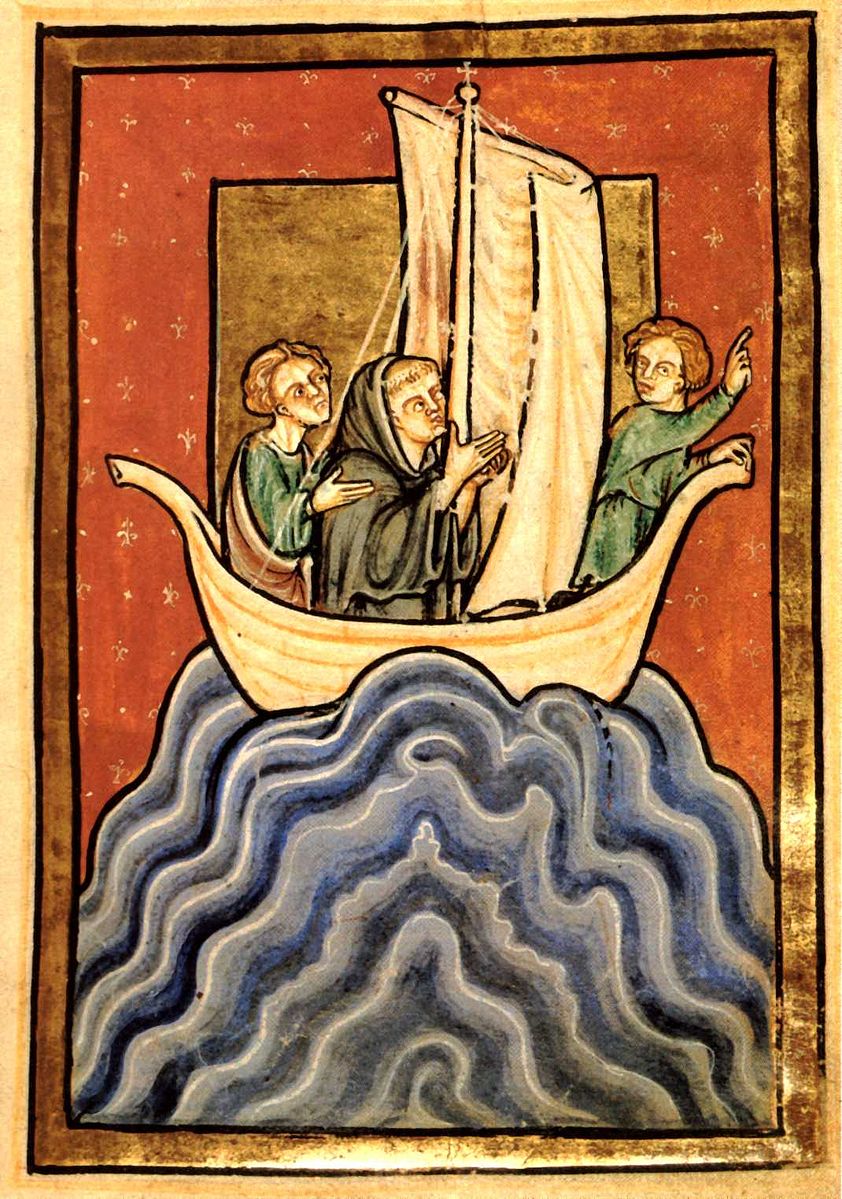
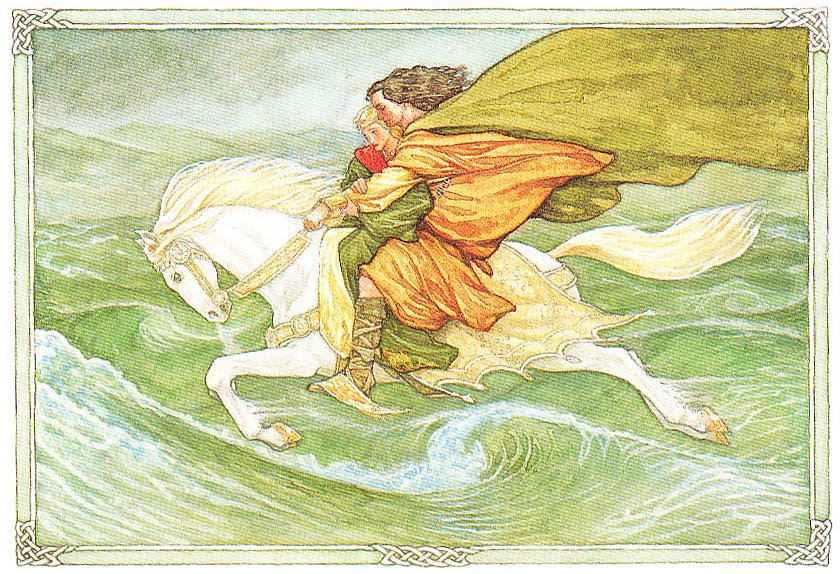
Voyage Tales (Immrama) and Adventure Tales (Echtrai)
Stories of marvellous sea voyages to otherworldly islands (e.g., Immram Brain - The Voyage of Bran) or adventures into supernatural realms.
Dinnsenchas (Lore of Places)
A significant genre comprising poems and prose tales explaining the origins of place names, linking them to mythological or historical events and figures.
Genealogies and Synthetic History
Continued importance, with major compilations like Lebor Gabála Érenn (The Book of Invasions), which attempted to create a comprehensive legendary history of Ireland, integrating native traditions with biblical and classical accounts.
Religious and Didactic Literature
Saints' lives and homilies continued to be popular, and this period also saw the rise of a new genre, Vision Literature. These tales recounted personal revelations or visions of the afterlife, and were filled with the same type of fantastic imagery that voyage texts contained. But these tales were far more grand, as befitting their eschataological nature. While this was a pan-European genre, the Irish works in this vein focused more and more on a liminal state of the soul after death, a place where the soul would undergo trials, and, through those trials, become worthy of residing in eternal bliss. Later Christians would recognize such a state as Purgatory. The 10th-century Fís Adamnáin (The Vision of Adamnán) is one of the best of these; it's Dante's Commedia Divina, only three hundred years earlier.
When we look at the history of the concept of Purgatory, we see the distinctiveness, or hiddenness, or insularity, of Christianity in Ireland. It's not until the late 13th century that the Roman/Universal church catches up with Ireland. The Council of Lyons (1274) officially recognized purgatory and affirmed that souls in purgatory are helped by the prayers of the faithful. The Council of Florence (1439) reaffirmed the teaching and clarified that the souls in purgatory benefit from masses, prayers, and almsgiving. And the Council of Trent (1545–1563), responding to the Protestant Reformation, reaffirmed its existence and doctrinal basis. It condemned both the denial of purgatory and abuses related to indulgences but upheld the practice of praying for the dead.
Poetry
Both religious and secular poetry flourished. Bardic schools were becoming more formalized.
Key Manuscripts (major compilations)
Lebor na hUidre (The Book of the Dun Cow)
This is an Irish vellum manuscript, compiled around 1100 CE from older manuscripts and oral traditions. It's a collection of factual material and legends that date mainly from the 8th and 9th centuries. It is the oldest extant manuscript in Irish, but it's badly damaged; only 67 leaves remain and many of the texts are incomplete. It was written in Irish at Clonmacnoise by two principal scribes (Mael Muire Mac Célechair and an unnamed scribe (A)), then later revised by an interpolator (H) using different sources. It is named as it is because it was supposedly created from the hide of a dun cow by St. Ciarán of Clonmacnoise or was made from the hide of a dun cow owned by St. Ciarán. But St. Ciarán lived 500 years before this ms was compiled, so that's either one old cow or one old monk. In any case, this ms contains the oldest version of the Táin Bó Cuailgne, the Voyage of Bran, the Feast of Bricriú, and other religious, mythical, and historical material. It's held in the Royal Irish Academy.
The Book of Leinster
Compiled in the middle of the 12th century, but contains much Old Irish material. What remains of this huge volume (410 folio pages) contains about as much written material as a 3000-page novel, and the original collection was even longer. It collects nearly 1000 pieces of both prose and poetry (historical sketches, romantic tales, topographical tracts, genealogies, etc.)—a vast collection of ancient Irish lore. It's been called the Encyclopedia of Medieval Ireland.
This ms was presented to Trinity College Dublin in 1786. Exposure to sunlight, poor attempts to restore it over the ensuing centuries, and the breakdown of the vellum left it in a crumbling state. A multi-year restoration project (funded by the Bank of America) was completed in 2025, and in May of that year the ms went on public display for the first time ever. TCD is also home to what is perhaps the most famous illuminated manuscript in the world, The Book of Kells. The Book of Leinster was included in their "Book of Kells Experience" exhibition for three months.
Some of its highlights:
- a very fine perfect copy of the Táin Bó Cuailgne
- a version of the Lebor Gabála Érenn (The Book of Ireland's Taking)
This was an attempt by medieval scholars to establish the place of Ireland, the Irish people, and their language in a biblical world setting. It is tantamount to the origin story of the Irish people and their language. Among its great tales is one on the origin of a heavy tax known as The Boru Tribute:
One Milesian prince, Thuathal, King of the North, imposed this heavy tribute upon the kingdoms of the south, which was paid for five hundred years. This was the result of an insult offered by the provincial King of Leinster, who
"had married the daughter of Thuathal, but,
conceiving a violent passion for her sister,
pretended that his wife had died, and
demanded and obtained her sister in marriage.
The two ladies met in the royal house of Leinster.
Astonishment and sorrow put an end to their lives!"
The Boru tribute was then imposed
"as a perpetual memorial of the resentment of Thuathal
and of the offense committed by the King of Leinster."
- a description of Tara, along with seating charts and menus for feasts held there
The Hill of Tara is an anglicized version of the original Irish name Teamhair, or Cnoc na Teamhrach, "the Hill of Tara." Some records name it Tara of the Kings (Teamhair na Rí). The oldest known monument there is Neolithic, dating to 3200 BCE. It was originally a burial site, but then became the seat of the High Kings of Ireland. It was still the country's political capital when Anglo-Norman mercenaries landed in Ireland in May 1169, at the request of Diarmait mac Murchada (Dermot MacMurragh), the deposed King of Leinster, who sought their help in regaining his kingship. They achieved this within weeks, then began raiding other kingdoms. This military intervention was sanctioned by King Henry II of England. In return, Diarmait swore loyalty to Henry and promised land to the Normans. This invasion was furthered in the next year, when other Norman forces took Dublin, Waterford, and other areas. And in 1171 it was solidified when Henry II landed with an army large enough to control both the Irish and the Anglo-Normans. Thus began the 800+ years of British dominance in Ireland. - a full copy of the Dinnsenchas
This collection of over 170 poems, plus prose commentaries and independent prose tales is considered onamastic (onamastics is the study of proper names, including their etymology, history, and use). Each piece details the origins of place-names and traditions concerning events and characters associated with the places in question. Since many of the legends being related also concern the acts of mythic and legendary figures, the Dinnsenchas has been an important source for the study of Irish mythology. (Medievalists make a distinction between the "prose dinnsenchas" and the "verse," "poetic," or "metrical" dinnsenchas.)
The dinnsenchas are clearly a product of the oral tradition; they are structured so as to be a mnemonic aid as well as a form of entertainment. They are, of course, far more fanciful than accurate. Many of the explanations given are made to fit pre-existing names. In other cases, the poets may have invented names for places when they didn't know their names. Most of them are pre-Christian; many placenames appear which had fallen out of use by the 5th century CE, when Irish written records began to appear with any regularity. Christian and Greco-Roman references and stories are rare in these works.
Rawlinson B 502
Officially, this ms is called Oxford, Bodleian Library, Rawlinson B 502. Some scholars have also called it The Book of Glendalough, (Lebar Glinne Dá Locha), after several allusions in medieval and early modern sources to a manuscript of that name. However, there is currently no agreement as to whether this ms, or, more precisely, its second part, is actually the manuscript referred to by that title.
Two separate codices were compiled around 1125-1130, but they were bound together into a single ms sometime in the early 17th century. It was described by Brian Ó Cuív as one of the "most important and most beautiful ... undoubtedly the most magnificent" of the surviving medieval Irish manuscripts. Pádraig Ó Riain states " . . . a rich, as yet largely unworked, source of information on the concerns of the community at Glendalough in or about the year 1131, and a magnificent witness, as yet barely interrogated, to the high standard of scholarship attained by this monastic centre."
Yellow Book of Lecan (compiled later, but contains much Middle Irish material)
This 344-page ms was copied out in Co. Sligo before 1401 CE. It contains 152 distinct works, a mixture of the ecclesial and secular. It has nearly the whole of the Ulster Cycle, with a partial version of the Táin Bó Cúailnge. There are catechisms, commentaries, homilies, stories of the saints, dinnsenchas, a description of the banqueting hall at Tara, religious lyrics, and other, poems, tales, and immrama. Besides a number of ornamented capitals, there are no illuminations in this ms; it's important not for its art, but for the density of material it contains. It is currently held in Trinity College Dublin.

* These guides use five special symbols, taken from Mark Williams' Ireland’s Immortals: A History of the Gods of Irish Myth, Princeton UP, 2016.
ə |
the uh sound at the end of sofa |
|
a throaty gh sound, similar to the -ch in Scots loch but further back and down in the gullet. Not to be confused with the letter "y" |
kh |
the ch in Scots loch, spelled with a k– to avoid confusion with the ch in English child. |
ð |
the th– sound at the start of those, that, and than, which is different from the th– sound at the beginning of thick, thin, or think. |
ʸ |
indicates that the preceding consonant is "palatal," that is, accompanied by a y-glide like the m in mew or the c in cute (contrast moo and coot). This often occurs at the end of a word: in a form like the place-name Crúachain, which would be KROO-əkh-ənʸ. The y is there simply to indicate that the final consonant is pronounced like the first n in onion; it does not add a syllable. |