TIMELINE OF IRISH LITERATURE
from 600 BCE to 1850 CE
ROMANTIC NATIONALISM / THE GREAT HUNGER — c. 1800 CE - 1850 CE
Context
The English reaction to the United Irishmen Rebellion of 1798 tightened its control over the island. For the next half-century the Irish had small political victories, but An Gorta Mor showed them just how little the English thought of them. By 1850 the landscape of Irish literature had fundamentally changed. The once-dominant Irish language tradition had been severely weakened, while Anglo-Irish literature, written in English, was firmly established and beginning to explore themes that would lead to the Irish Literary Revival later in the century.
Characteristics
Further Decline of Irish Language
The Irish language continued its retreat, especially in the east, due to socioeconomic pressures, the education system, and emigration. While still spoken by millions, its literary output became less formal and more marginalized.
Rise of the Novel in Anglo-Irish Literature
The novel became a dominant form, often exploring themes of Irish identity, history, and social class, sometimes with a romanticized view of the past.
Emergence of Nationalist and Romantic Themes
Writers began to engage more explicitly with Irish nationalism, history, and folklore, contributing to a growing sense of a distinct Irish identity.
Impact of the Famine
The Great Famine (1845-1849) had a devastating and irreversible impact on the Irish language and the oral traditions that sustained much of its literature, leading to mass emigration and a further shift towards English.
Key Events
The Act of Union (1801)
This political response to the United Irishmen rebellion abolished the Irish Parliament and integrated Ireland directly into the United Kingdom, further centralizing power in London.
The Act of Union was supported by British Prime Minister William Pitt, who envisioned it as working in tandem with relef for Irish Catholics from paying tithes to support the Anglican Church in Ireland, state payment of salaries to the Irish Catholic priesthood, and, most importantly, Catholic emancipation, allowing Catholics to sit in Parliament. But Parliament and the King balked at that, Pitt resigned, and even when emancipation did arrive almost three decades later, the legislation that accompanied it resulted in a significant reduction in the number of Catholics who could vote.
Catholic Emancipation (1829)
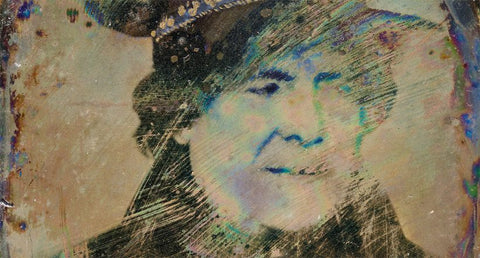
The Roman Catholic Relief Act 1829 removed the sacramental tests that barred Roman Catholics in Great Britain and Ireland from Parliament and from higher offices of the judiciary and state. It was the culmination of a fifty-year process of Catholic emancipation which had offered Catholics successive measures of "relief" from the Penal Laws.
The Act was opposed by King George IV and the House of Lords, but the Prime Minister, Arthur Wellesley, saw it as necessary if the British were to maintain control of Ireland. Wellesley threatened to resign and retire the Tory government he led in favor of a new, reform-minded Whig ministry; the fear of a more liberal House of Commons (that might be more amenable to Irish independence, or at least repeal the Act of Union) caused the House of Lords and the King to acquiesce.
On the other hand, the Protestant Ascendancy in Ireland were reassured by the simultaneous passage of the Parliamentary Elections (Ireland) Act 1829. Prior to this act, Irish men could vote if they owned land valued at 40 shillings (2 pounds). This act raised the land-holding threshold to the value of 10 pounds, or 5 times more land, thereby stripping over 80% of Ireland's electorate of the right to vote (including a majority of the tenant farmers who had helped force the issue of emancipation in 1828 by electing to parliament the leader of the Catholic Association, Daniel O'Connell). So even if Catholics could hold seats in Parliament, this Act ensured that there would never be enough co-religionists to vote them into office.
The Great Famine (1845-1849/52)
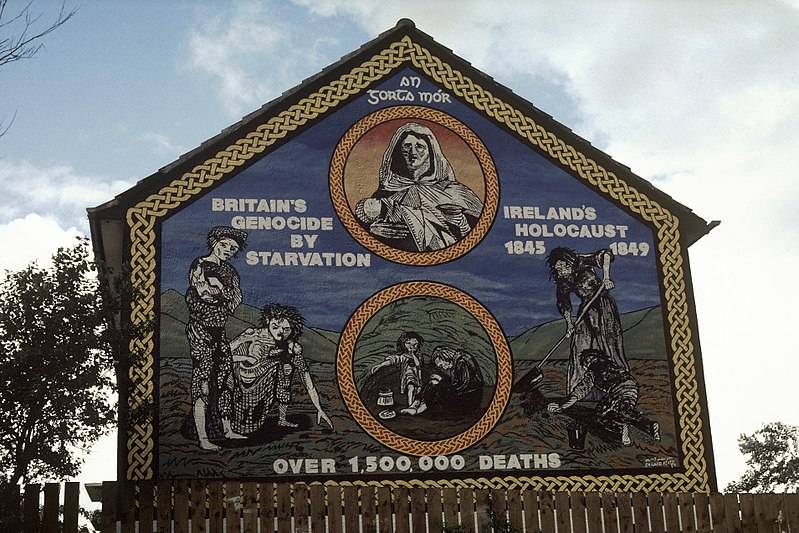
In 1845, the spores of the mold phytophthora infestans were carried by wind, rain, and insects to Ireland from Britain and the European continent. This mold affected the potato plants in Ireland, producing black spots and a white mold on the leaves, and rotting the potatoes themselves to a pulp. Half of the potato crop in Ireland failed that year, as did 3/4 of the crop for the next seven years.
Food prices in Ireland had doubled by December of 1845, and tens of thousands died of starvation in 1846. Non-governmental organizations, especially the Society of Friends (the Quakers) ran the only real relief efforts. Protestant charities set up soup kitchens, but would only feed Catholics (the overwhelming majority of those who were without food) if they renounced their faith and converted.
In their five centuries of mistreatment of the Irish, the recalcitrance of the British to offer aid to Ireland during this time (and their insistence that Ireland contine unabated to export food to England) might be the nadir of their relatiosnhip and the true expression of their contempt for their oldest and closest colony.
Before it ended in 1852, An Gorta Mór (The Great Hunger) resulted in the death of roughly one million Irish from starvation and related causes, with at least another million forced to leave their homeland as refugees.
Notable Authors/Works
Maria Edgeworth (1768-1849)
Pioneer of the regional novel, whose works like Castle Rackrent (1800) offer keen observations of Irish society and landlordism.
Sydney Owenson, Lady Morgan (c. 1783-1859)
Novelist and nationalist, known for works like The Wild Irish Girl (1806), which romanticized Irish culture and history.
Thomas Moore (1779-1852)
Renowned poet and songwriter, whose Irish Melodies (begun 1808) popularized traditional Irish airs with new English lyrics, fostering a sense of national pride and nostalgia.
William Carleton (1794-1869)
A significant novelist who depicted rural Irish life and the hardships of the peasantry in works like Traits and Stories of the Irish Peasantry (1830-33). His later work also addressed the Famine.
